The Decision Comes Before the Booking
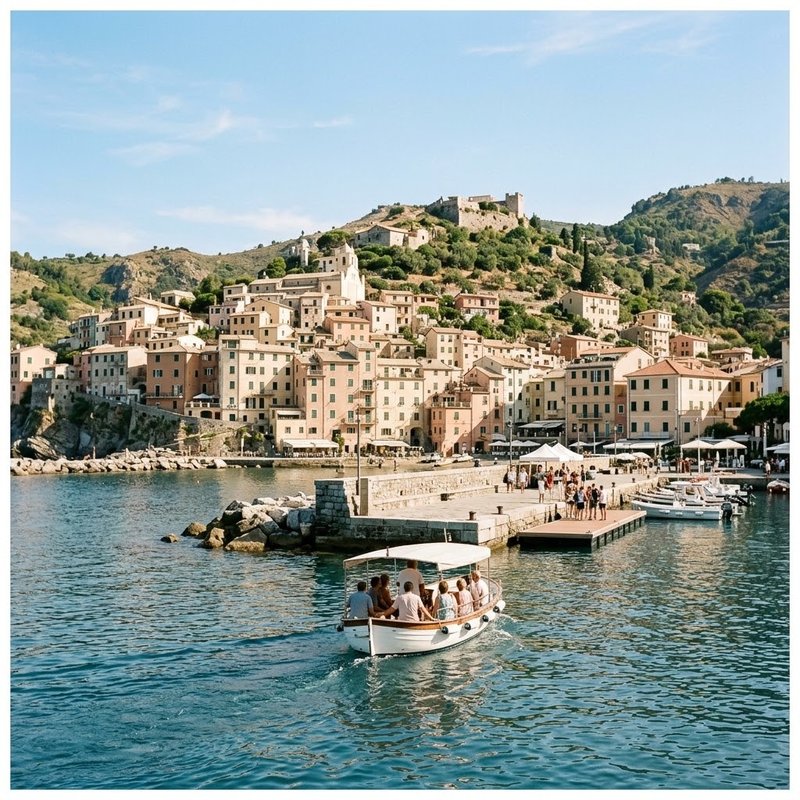
The first choice on a port day is not which tour to take, it is how many of the ship's hours you are willing to hand over. A ship tour leaves the pier late and returns early, and it buys that safety with a group of forty and a photo stop nobody asked for. A taxi day keeps the same deadline and sets the pace yourself, which works only when the dock, the town and the trip back can be read off a map before you sail.
I plan every port day backwards from all-aboard, the same way the Jamaica plan works: the deadline is fixed, so everything else is fitted inside it. Three options sit in front of most passengers, and each one wins in a different kind of port.
What the Ship Sells
The tour desk on board sells the safest hour in the terminal and the most expensive. The price covers a guide who waits for you, a coach that holds the group, and a seat back to the ship if the day runs long, which matters more than it sounds in ports where the tender ride alone takes twenty minutes. What you give up is time: a half-day tour runs four hours door to door, and the last stretch usually stops at a workshop with a sales floor.
Two rules I use when I book one. The ship tour earns its price in ports with a long transfer, where the pier sits far from the highlight and losing the coach costs the whole day. I also read the walking note and the coach seating line, because those two decide whether the route suits someone who cannot stand for an hour.
Going Independent
Towns within a short walk of the pier reward the independent day. A rank of taxis at the gate, a fixed town rate on the sign, and a loop you can finish in three hours is the shape I look for, and it usually costs less per person than the ship tour while giving back two hours. Shared minibuses sit in the middle: cheaper than the desk, guided enough that nobody negotiates at every corner.
Prices move inside a predictable band. A taxi into town in most Caribbean ports runs ten to twenty dollars each way for the car, a shared minibus is a few dollars a seat, and the ship tour for the same highlight sits between fifty and one hundred dollars per person. That gap buys a guaranteed seat back, and in a port where the guarantee is worth it I pay it without arguing.
- Walkable pier: go on foot, and keep cash for the taxi back after a long lunch.
- Short transfer with a posted rate: taxi out, bus or taxi back when the day runs long.
- Anchored port or an industrial dock: ship tour, or a private car booked ahead with a hard return time.
Independent days fail in two predictable ways. The dock is an industrial berth with no town inside walking distance, or the last bus back leaves before you have finished eating. Both are visible on a map in the week before sailing, so I check them at home instead of on the morning.
Planning the Hours
A port day has four clocks: all-aboard, the transfer out, the time you actually want in the place, and the line at the gate on the way back. On a typical Caribbean call the ship is alongside from eight in the morning until five in the afternoon, and the useful part of that window is closer to six hours once movement and the half hour before all-aboard are subtracted. I write the hours down before I pick anything: transfer, highlight, food, second look, return.
The last hour is the one people lose. Tender ports add a queue that can run forty minutes, and a taxi rank at five in the afternoon has one car for every thirty passengers off the same ship. When a long line is built into the call, I plan to be at the gate an hour before the printed time and treat the difference as the price of an unhurried afternoon.
What I Book Before Sailing
Most of a port day can wait until embarkation. Four things are cheaper to settle at home, and the rest is better bought on the morning itself.
- The long transfer. Anything over an hour each way gets a seat held before the ship sails.
- The scarce ticket. Snorkel boats, cave lifts and small-group walks sell out weeks ahead in high season.
- Connectivity for the day. If the plan depends on a meeting point, buy the day pass instead of trusting the pier wifi.
- The return plan. A taxi number, a bus stop or a walking route, saved with the all-aboard time on the same line.
Everything else stays open, because the best version of a port day usually appears after the first coffee ashore: a market two streets back, a bus that leaves when it is full, a driver who knows a shorter road. Book the hard parts and keep the soft parts loose, and the day remains yours even while the ship keeps the clock.