These six notes come from forty-one sailings and the page of notes I keep on which ships handle rough water well. They assume a chosen voyage rather than a crossing you have no alternative to, and every line states its cost in motion, time or money.
1. Ship Size Changes the Motion, Not the Forecast
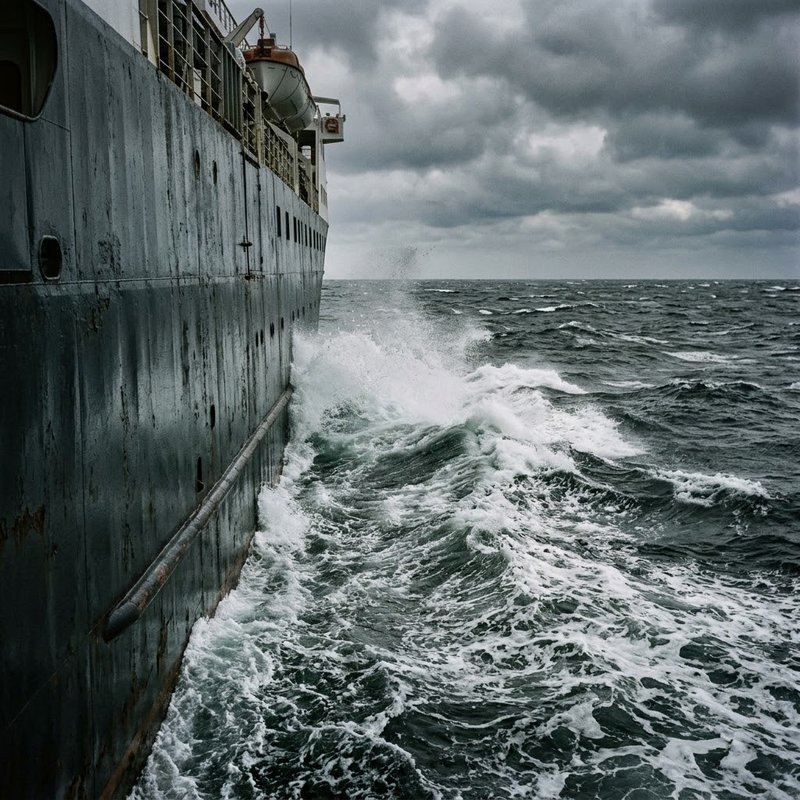
A ship of 140,000 tons and a ship of 40,000 tons meet the same swell, and the larger one plans it and keeps the horizon steadier while the smaller one climbs. The bigger ship costs more per night in fare and usually carries more people per deck, while the smaller one sails older routes with fewer passengers and a quieter week.
Stabilisers do part of the same job on both, and they are worth asking about when two ships are being compared. They cut the roll at anchor and in a beam sea, they do nothing for a head-on swell, and they are the reason a large ship still moves on a night when everyone expected it to sit flat.
2. Read the Route for Open Water
The month tells you less than the distance between two consecutive ports, because that gap is where the ship has no land to break the sea. When I compare two itineraries I check the longest leg first, then its direction, since a westbound Atlantic leg takes the weather head-on.
- Island to island in the Caribbean: typically 200 to 500 miles of open water overnight.
- Bay of Biscay and the northern European approaches: short in miles, steep in swell.
- Drake Passage to Antarctica: about 600 miles each way, the roughest scheduled water I have sailed.
3. Midship and Low Costs the Least Motion
Motion is largest at the ends of a ship and highest on the upper decks, so a cabin midship and low saves a measurable amount of movement for the same money. The trade is the view and the walk: a low midship cabin can be three corridors from the lift, while a high aft balcony is a short stroll from the pool and sits above the wake.
The difference is easy to feel on the same night. A low midship cabin through an open crossing keeps a glass of water on the table, while an aft cabin two decks up turns that glass into a job. When the route has a long leg in it, I take the motion and walk to the pool instead of the other way round.
4. The Sickness Plan Comes Before the Sail
Remedy works best on a steady stomach before motion starts, and the onboard pharmacy prices it after you need it. I set the plan on the evening before sailing rather than on the first rough morning, and the pharmacy on board sells the same tablets at a premium once the ship has left. Written on the cabin card, the plan runs like this:
- Pack the tablets or patches you already know suit you, in the day bag.
- Take the first dose before leaving the berth on any night with an open sea leg.
- Keep the plan running through the second evening, when the body usually settles.
- If nothing has moved by day three, ask the medical centre rather than doubling a dose.
Two cheap habits do as much as any tablet: eat light before the open leg, and fix your eyes on the horizon on deck instead of a book below. On the crossings I have done, the people who stayed upright were the ones who went outside early.
5. Itinerary Changes Belong to One Season
Named storms cluster between mid-August and late October, and lines respond by shifting ships to southern routes instead of cancelling calls. A sailing in that window costs twenty to thirty percent less per person than the same week in February, and the price of that saving is a port list that can change twice, once at fourteen days out and again at three.
Routes with a fixed alternative are worth more than a route that promises none, because a line with a southern option can move the ship on two days notice and keep the week. I ask which ports have substitutes before the deposit goes down, and I read the answer as a feature of the itinerary rather than a footnote to it.
Travellers who book for one specific dock should read the change terms before a deposit is paid, because the difference between a refund and a future credit is written there and not in the brochure. The line I work with quotes both options in the same message, which is why I ask for them side by side.
6. The Two I Would Not Skip
If only two lines from this list survive the planning, keep the longest open-water leg and the midship cabin. One tells you when the week will move, and the other decides how much of that movement you feel in bed.