This list comes from seven years pier-side at a terminal in Fort Lauderdale and the log I keep of embarkation times by port. It assumes a first or second sailing, a standard window that runs from midday to three in the afternoon, and one checked bag per person.
1. Eat Before You Reach the Terminal
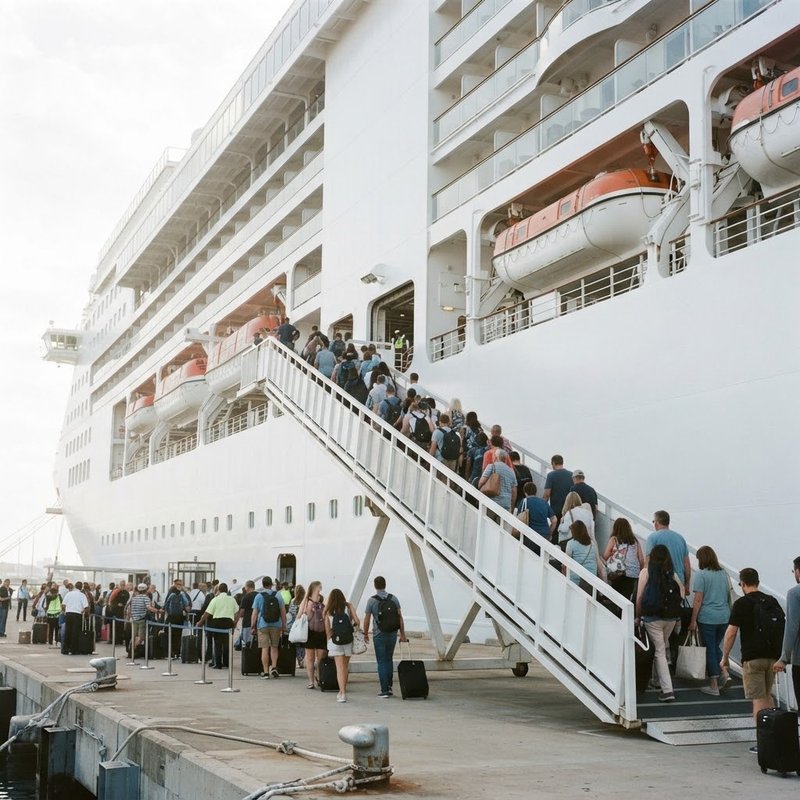
The first two hours inside the terminal have no food worth queueing for, and the lunch queue on deck hits its peak just after one o'clock. I eat a proper meal in the port city and keep a snack in the day bag for the gap between check-in and a cabin that is ready. The terminal coffee queue is the one line on the whole day that serves nobody, because the cup is cold by the time you reach the front of it.
2. Documents in One Hand
Passport, cruise ticket, booking reference and the card for the onboard account stay in one folder, because the desk asks for the same four items twice. Registering the card before sailing means the account is already open when you reach the cabin, and nobody spends the first evening in the queue at guest services sorting paperwork.
- Passport and visas for every port on the route.
- Printed tickets as well as the app, since pier wifi is thin in the queue.
- One card with no foreign transaction fee, and a second in another bag.
Photocopies of the passports go in a different bag from the originals, and the booking reference sits in email as well as on paper. The desk can reprint a ticket, but the queue for it is longest in the half hour before the ship sails.
3. Arrive in the Last Third of the Window
Terminal crowds follow the same curve every sailing: a rush just after the doors open, a quiet stretch after two, and a final surge in the hour before departure. In my log, boarding between half past two and three in the afternoon took under fifteen minutes, while the same ship at noon kept passengers in the queue for an hour.
The trade is luggage timing rather than comfort. Bags travel to the cabin only after they are collected from the pier, so an early arrival means a later suitcase and a late arrival means carrying it yourself.
4. Cabin Before Luggage
When the gangway opens I go straight to the cabin instead of following the crowd to the buffet. Half the suitcases are still somewhere below deck, and the half hour is better spent finding the sockets, checking the safe, and reading the all-aboard time for the first port.
This is also the window for the small cabin requests: the extra pillow, the table for two, the cot that has to be folded away each morning. After seven in the evening the same requests join a queue at guest services that moves at the speed of the party in front of you.
5. Muster Drill First, Lunch Second
The muster drill is compulsory in practice as well as in print, and the station fills fastest in the half hour before departure. I read the station number on the key card, walk the route once, and only then go up for food while the restaurants are still quiet.
On ships where the drill is checked at the station rather than on a screen, the walk also finds the two turns you would otherwise learn in the dark on the night when the alarm goes. It costs four minutes and removes the only part of the first evening that runs on nerves.
6. Luggage, Tags and the Late Case
Bags travel from the pier to the cabin in batches, and the last cases of the day usually arrive after dinner. The tags printed with the boarding passes decide which batch you are in, so they go on at home rather than at the terminal door, when the queue has already started.
- Printed tags on every bag, including the one that stays with you.
- A change of clothes in the cabin bag in case the case runs late.
- Nothing valuable in a bag that goes to the hold, because the hold has no camera on it.
Late cases are the normal case, not the exception, so the evening plan should survive a cabin that arrives with a wardrobe still empty. On the sailings I work, the last bags of the day are still coming up in the hour before dinner.
7. The First Evening Is Not for Plans
Port times, dining sittings and the excursion desk all read differently on board than they did on the website, and the evening is for reading them rather than booking against them. If two lines have to survive the day, make them the meal before arrival and the cabin before the buffet: those two fix the problems that cost first-timers the most time.