This list is what I hand to a group when we agree a budget, because tipping is the part of a cruise bill people argue about after the fact. It assumes the common setup where a daily gratuity is added to the onboard account and discretionary cash is still welcome.
1. Know the Daily Rate Before You Sail
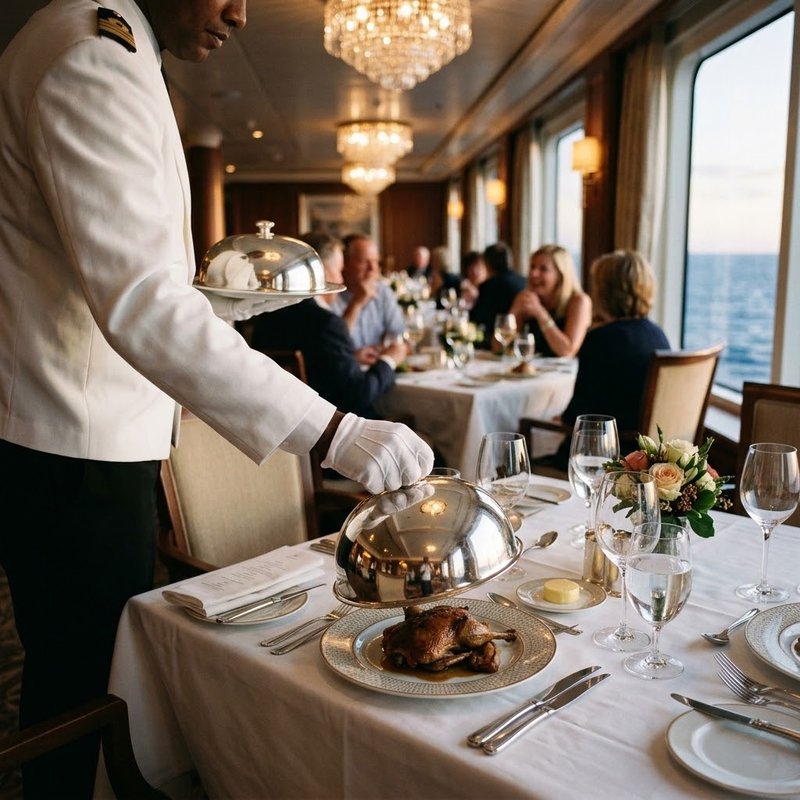
The rate is published per person per day, it runs for the whole sailing, and it is charged to the onboard account whether or not you ask for it. On a seven-night sailing for two adults the total lands at roughly the price of two decent dinners ashore, so it belongs in the budget sheet before two fares are compared.
The rate is the same for adults at full price and usually lower for children, and it runs on the port days as well as the sea days, because the cabin is serviced every morning of the sailing. Lines let you remove it at guest services if you would rather pay the crew in cash, and the desk will ask why, which is a fair question to answer honestly.
2. The Two Envelopes I Still Carry
Even with automatic gratuities, cash still reaches the two people who make the week work: the cabin steward who turns the room twice and the waiter who remembers how you take coffee. I set a small amount aside on the first night and hand it over on the second to last evening, because the last night is chaos at every desk on the ship.
Amounts sit in a narrow band: a small note for the steward and a slightly larger one for the waiter who served the table all week, multiplied by the nights rather than guessed on the last morning. On a group booking I collect the envelopes on day five, because people forget what they meant to do once the ship is in its final port.
3. Drinks and Speciality Dinners Sit Outside It
Service on bar tabs and in speciality restaurants is usually added automatically at fifteen percent or more, and a drinks package carries its own charge per day on top of the fare. The rule I give a group is simple: read the line under the total, and never pay twice on the same bill without deciding to.
Where a package is already bought, the daily rate still applies to the cabin and the speciality cover still gets its own line. I write the three numbers on one card so nobody works them out at the bar on the last night.
Coffee, room service and the snack counters sit in different places again: some are covered by a package, some carry a tray charge, and a few are free at any hour. The card in the cabin wallet lists what each venue adds, and reading it once on day one is cheaper than reading the bill twice on day seven.
4. One Card, One Cap, Per Cabin
Cabins run a running account, and a teenager with a signed card can spend a week of it in a single afternoon at the gelato counter. I set one card for the cabin, put a spending cap on the secondary cards, and review the account in the middle of the sailing rather than at the end.
- Register the main card before boarding so the account opens on day one.
- Give each teenager a card with a fixed limit and no overdraft.
- Check the account on day four, while disputes are still easy to fix.
One card also keeps the group spreadsheet honest, because every line on it comes from a single statement instead of four people remembering what they spent. I ask for the statement PDF at the end of the sailing and keep it with the contract, which settles the argument that otherwise happens in a group chat a month later.
5. Read the Folio on the Last Night
The final statement arrives under the cabin door overnight, and the desk is quieter at eight in the morning than at eleven at night. The line items worth checking are the daily gratuity itself, any drink that was not ordered, and a spa charge posted to the wrong room, all of which can be corrected before the ship clears.
Two other lines are worth a glance: a drinks package that was charged for a day you spent ashore, and an internet plan renewed without anyone asking for it. Both are ordinary mistakes rather than tricks, and both are simple to remove when they are raised at eight in the morning instead of at the gangway.
6. What I Tell a Group of Twenty
Two lines carry the whole policy: the daily rate goes into the budget on day one, and the folio gets read before the last morning. Everything after that is choice, and the group spreadsheet only shows tidy totals because the numbers were written down as they happened.